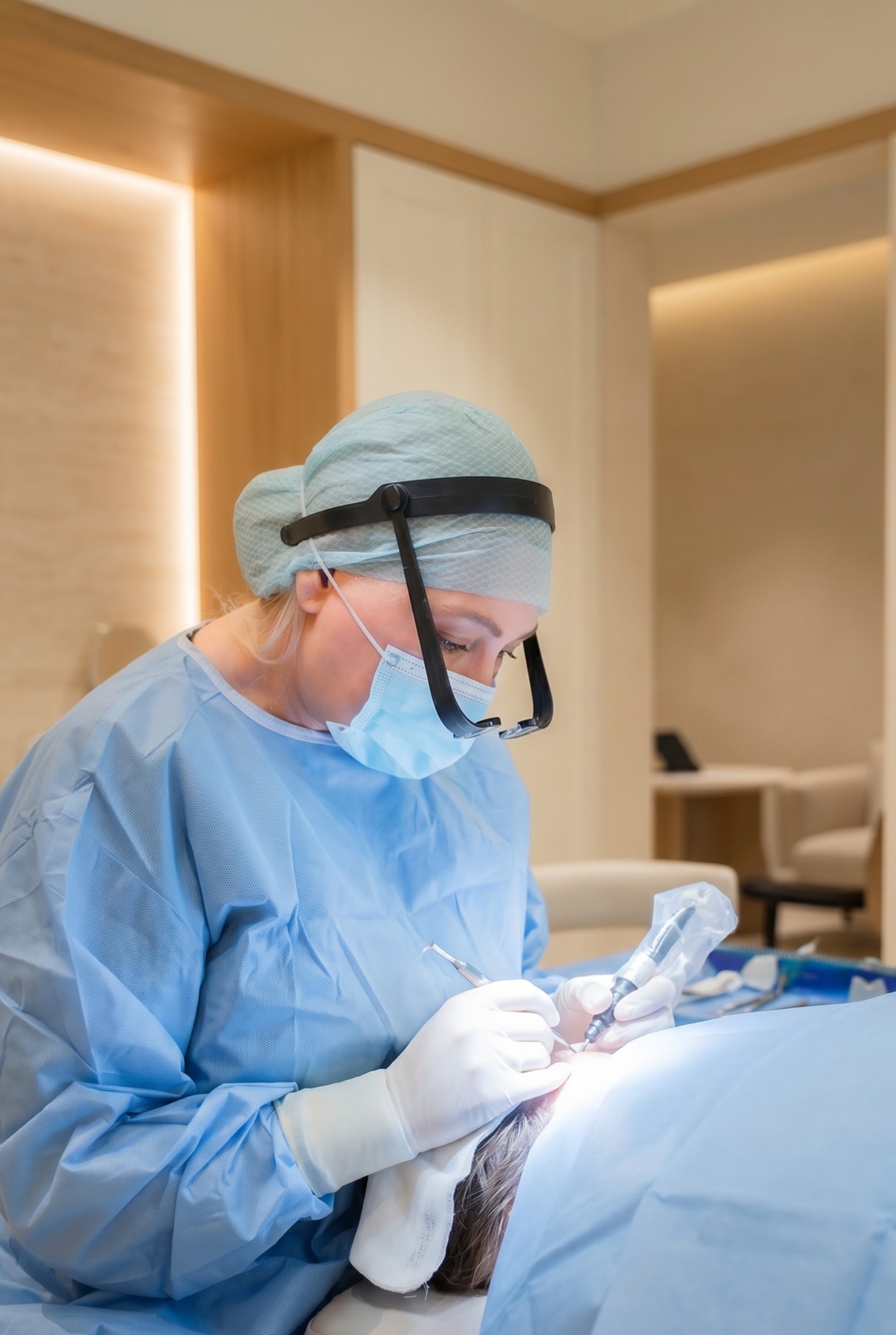

Hair loss affects more than just your appearance. It affects how you see yourself and how you feel. A hair transplant is therefore not an easy decision. It requires time, trust and a thoughtful choice. The range of hair clinics has grown significantly in recent years, just like the promises you find online. Nevertheless, the quality of approach, guidance and aftercare varies greatly from clinic to clinic. These 10 tips will help you choose a hair clinic based on realism, craftsmanship and care.
Hair loss affects more than just your appearance. It affects how you see yourself and how you feel. A hair transplant is therefore not an easy decision. It requires time, trust and a thoughtful choice. The range of hair clinics has grown significantly in recent years, as have the promises you find online. Nevertheless, the quality of approach, guidance and aftercare varies greatly from clinic to clinic.
These 10 tips will help you choose a hair clinic based on realism, craftsmanship, and care.
- A good hair clinic starts with listening
A professional process starts with a consultation that offers space for your story. Not as a formality, but as a foundation. We listen to what you are looking for, what you have experienced and what is important to you today.. A reliable hair clinic asks specific questions, observes and analyses — without immediately putting forward a treatment. Listening is not a step in the process. It is the process.
- Be critical when making big promises
“Guaranteed natural results.” “Closest hairline possible.” “No scars, no risks.” Sounds too good to be true? That's what it often is. Hair transplantation is a craft, not a magic art. Results depend on your own hair quality, the density of your donor area, your skin type and the recovery process. A reliable clinic paints a realistic picture and also identifies limitations. Transparency is a sign of expertise, not weakness.
- Note the clinic's aesthetic insight
Technology alone is not enough. A hairline is more than just a boundary between hair and skin: it determines how a face looks balanced and how natural a result feels. So ask about the clinic's vision. How is a hairline designed? Are contours, natural asymmetry and growth patterns considered? Aesthetic insight is at least as important as technology here.
- Inquire about the technique used
FUE (Follicular Unit Extraction) is currently the gold standard for hair transplantation. However, the technology itself says little. What matters is how carefully and thoughtfully it is applied. The placement of each hair follicle requires precision, patience and insight into natural growth. Angle, direction and coherence determine whether a result looks obvious. The difference is not in the method, but in the craftsmanship and aesthetic sense with which it is executed.
- Aftercare is decisive for the end result
What follows after the procedure is at least as decisive as the procedure itself. The skin must recover, the transplanted hair must anchor. This process requires time, care and clear guidance. Therefore, inform us in advance how the follow-up will take place. Are the instructions clear? Is there room for questions or uncertainties? Will the recovery be actively monitored? A clinic that stays involved makes the difference in the part of the process that you don't see but feel.
- Trust and comfort are not details
A hair treatment requires that you can surrender to the process. That starts with feeling comfortable, with space to ask questions and acknowledging doubt. Trust does not come from nice words, but from attitude: from patience, from transparency about what is possible and what is not possible, and how carefully uncertainties are dealt with. If that basis is missing, it is logical to also question your choice.
- Discretion is part of healthcare
Hair loss is personal. Not everyone wants to talk about it, let alone let others know you're undergoing treatment. A good clinic respects that. Discretion lies in small choices: how appointments are organized, how you are received and how your data is handled. It is not a luxury, but a form of respect and respect is part of craftsmanship.
- A consultation should never be mandatory
An informal consultation should also be really voluntary. It serves to gain clarity, not to feel pressure. You have to go home with insight, not haste. A clinic that understands that hair transplantation is an informed choice gives you the space to let information sink in and make a decision when you are ready. Without impatience or coercion.
- Note the number of treatments per day
The number of treatments that a clinic performs per day says a lot about how it works. When multiple interventions take place at the same time, attention is inevitably distributed. A limited number of treatments per day allows you to work with focus, rest and precision. Attention is essential when it comes to hair treatment. Haste seldom works in your favor.
- Choose a clinic that takes time for recovery
The end result of a hair transplant only shows up after months. That makes recovery a process, not a moment. A good hair clinic will continue to provide guidance from the first few days after treatment to the point where the results really take hold. Recovery isn't just about healing, it's also about reassurance. Clear follow-up, accessibility and attention make the difference here.
At Hairmás, we consciously choose rest over speed and attention over volume. Because hair repair is not a quick procedure, but a process that requires care, precision and time. There is a hairline between who you are and who you want to be. And it deserves expertise and recognition.
Plan one free consultation. We listen, watch and design what suits you.