
Hairmás has opened its doors in Brasschaat in an authentic building at Bredabaan 603A. The clinic, founded by Iwona Sroczynska and Christian Janssens, consciously opts for an approach that focuses on local aftercare and personal attention.
Hairmás has opened its doors in Brasschaat in an authentic building at Bredabaan 603A.
The clinic, founded by Iwona Sroczynska and Christian Janssens, consciously chooses
for an approach that focuses on local aftercare and personal attention.
20 years of expertise, new vision
Iwona Sroczynska has been familiar with the hair transplant sector for over 20 years and has seen the evolution of the
industry closely observed.
“What I've seen in recent years has been a shift towards volume. More and more patients per day, larger clinics.
But hair loss is personal.
It affects your identity, your self-image. You can't treat that like a conveyor belt.”
This observation formed the basis for Hairmás, a clinic where a maximum of a few people are consciously chosen.
treatments per day. “Time is our luxury,” explains Iwona.
“We want to be able to observe. How does someone's face move?
How does light fall? What is right with this person, at this age, with this character?
A hairline is not a template. It's a composition.”
Local aftercare as a choice
In recent years, many Belgians have chosen to travel abroad for hair transplantation,
attracted by lower prices.
This is a logical consideration, but it does involve specific challenges, especially when it comes to aftercare.
“What we often hear from people who have previously been treated abroad is that aftercare becomes difficult if there are questions or
are uncertainties,” says Christian.
“If you are unsure about the recovery, or if there are unexpected complaints, you can't just walk in.
You have to plan a trip again, sometimes thousands of miles. And when it comes to medical questions, a language barrier can be an additional barrier.”
For Hairmás, this was one of the reasons for explicitly opting for local care.
All aftercare takes place in Brasschaat, clients receive a direct phone number, and additional physical checks can be scheduled quickly.
“We are twenty minutes from Antwerp. If there's anything, our clients just drop by.”
Explicit focus on transgender community
What sets Hairmás apart from many other clinics is the explicit attention paid to the transgender community.
Both on the website and in all communication, transgender hair transplantation, both feminization and masculinization of the
hairline and beard transplantation, presented as a fully-fledged treatment category.
“That's no coincidence,” says Iwona. “For many transgender people, a hairline is part of their transition.
It's not just about her, it's about recognition. To come home to yourself.
And yet, many people feel unsure about discussing this at a regular clinic. We want it to be obvious.
For us, it's a core part of what we do.”
“During the launch of Hairmás, we spoke with several transgender people.
about their experiences,” says Christian.
“What we noticed is that many find access to specialized aesthetic care crucial in their transition,
but that not everyone feels welcome at regular clinics. We want to remove that threshold.”
Hairmás works with a medical team of doctors that is trained in both the technical and communicative aspects of transgender care.
Intake interviews are confidential, discreet, and time is always taken to align expectations.
FUE+ method: focus on quality over quantity
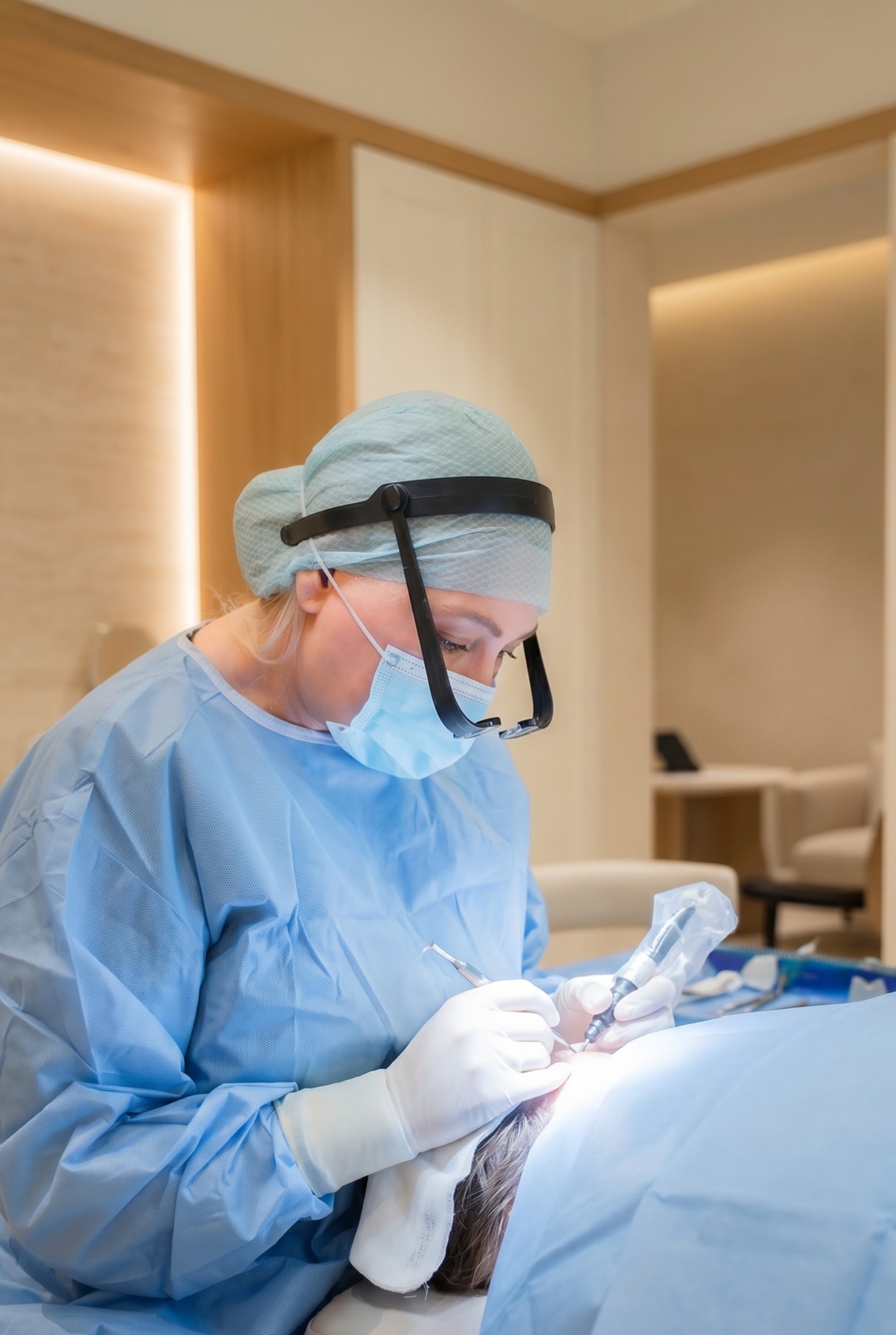
Technically, Hairmás works with the FUE (Follicular Unit Extraction) method, which uses sapphire blades
instead of traditional steel blades.
These are sharper, resulting in smaller incisions, less scalp trauma and faster recovery.
But more important than technology is the philosophy behind it, Iwona explains.
“Many clinics communicate in numbers. How many grafts do you get?
We don't look at how many grafts someone gets, but at how we use multi-hair grafts strategically,
so that we create maximum density with minimal strain on the donor area.” One graft can contain one hair, but also several.
By carefully analysing grafts under the microscope and distributing them thoughtfully, more density is created with fewer grafts
and less impact on the donor area. “The end result is not how many grafts you got, but how full your hair looks.
And that depends on how many hairs there are per graft,” says Iwona.
Transparent pricing per treatment zone
Where many clinics communicate in graft numbers, Hairmás opts for a different approach: predetermined zones
with clear prices per zone.
“We notice that people are often confused by graft numbers,” explains Janssens. “What do 2,000 grafts actually say? Few.
What is clear: do you want to repair your hairline? Your crown? Your coves?
We show prices per zone, so that our clients immediately know where they stand.”
After a free HairScan, clients receive a personal treatment plan that states which zones are relevant to them.
On the website, they can then calculate the investment per zone themselves.
“As a client, you know exactly where you stand beforehand. Transparency is the basis of trust,” says Janssens.
Homely building as a statement
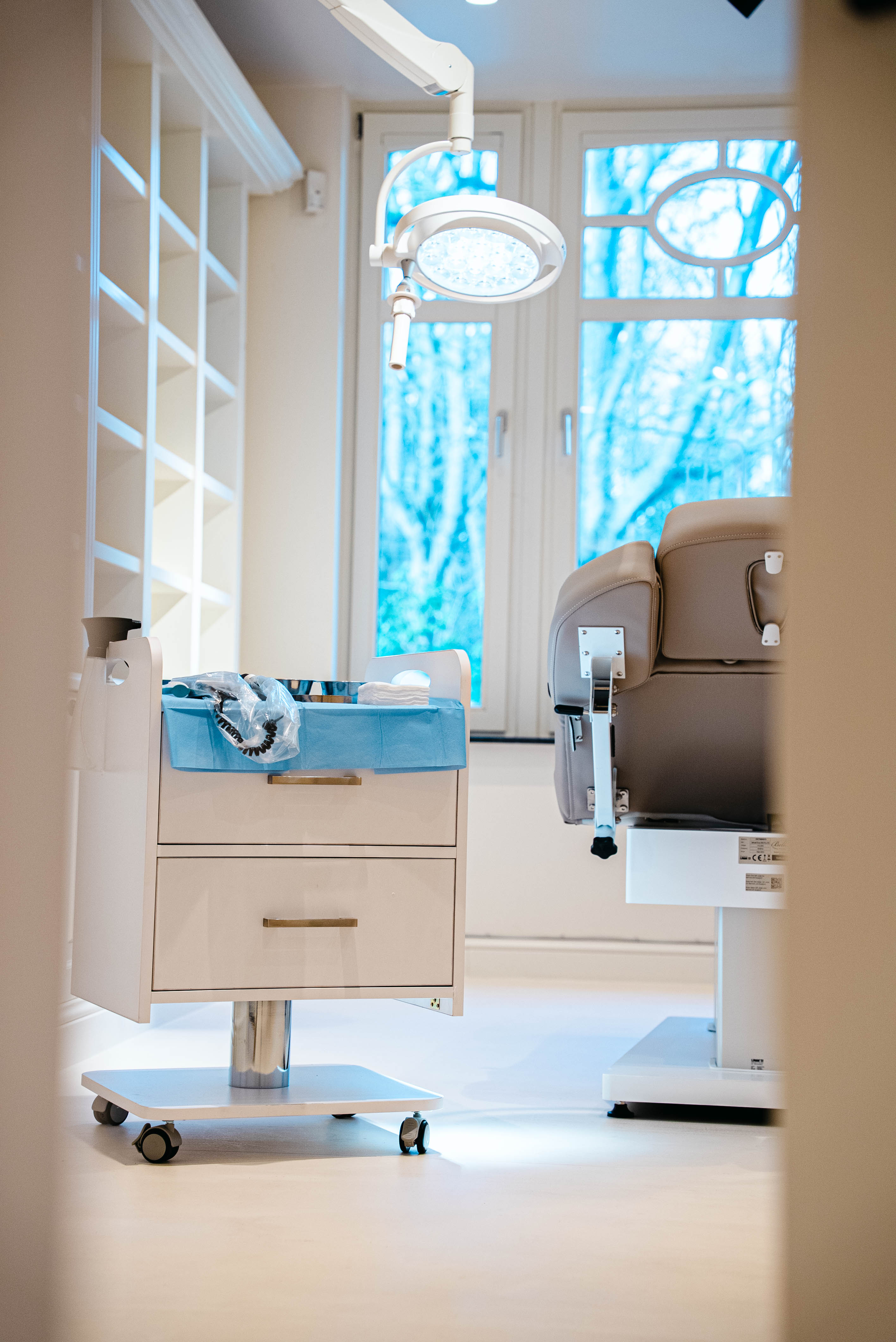
The building on the Bredabaan was deliberately chosen because of its homely character.
“We wanted to move away from a typical clinic with chilly spaces,” says Iwona.
“Something that feels like coming home. That fits how we work. This should be a place where people can feel comfortable.”
The interior is white, minimalistic, with lots of natural light and warm interior accents. “We wanted to radiate peace.”
Free HairScan and Intake
Hairmás offers a free online HairScan, where potential clients upload a few photos and within three business days
receive a personal treatment plan. This plan shows which zones are relevant to them and whether they are suitable for treatment.
In addition, there is a free intake interview at the clinic, without any obligations.
“We want people to be able to make informed choices,” says Janssens.